
A golf club is not finished simply because the epoxy has cured and the specifications have been checked. The next step is to put the completed build into a player’s hands and see what happens at impact.
The first swings
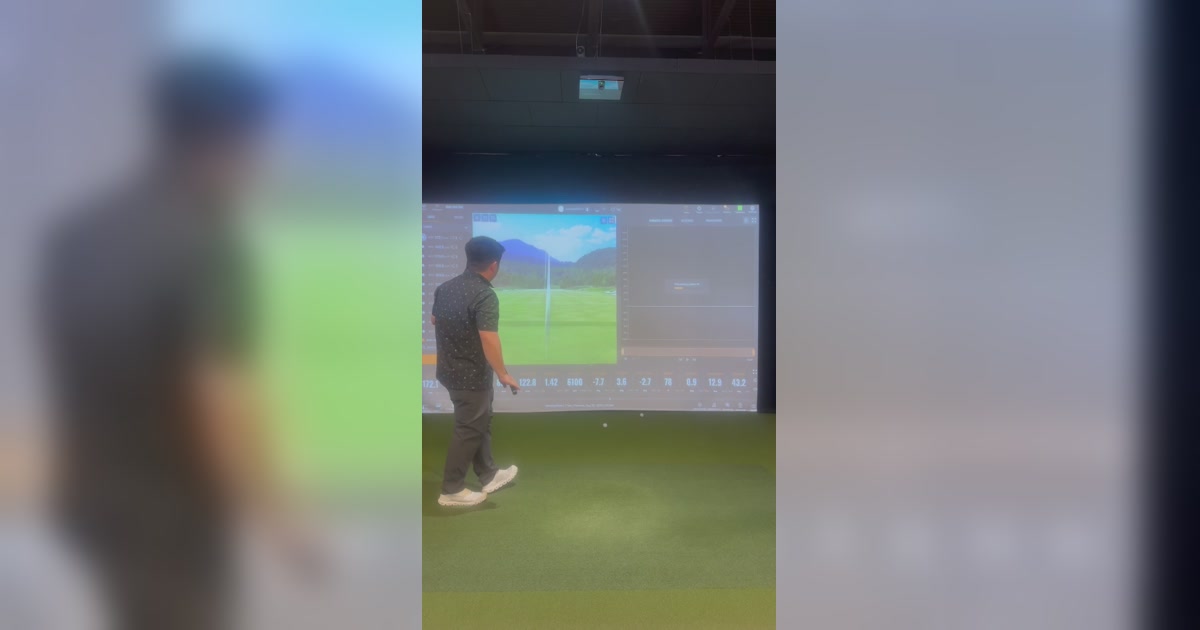
In this early testing session, a Ferro staff member hits one of our newly assembled irons on TrackMan at our Honolulu facility. This is the first step in moving the club from measured components to real-player feedback.
The purpose is not to celebrate one good shot. It is to confirm that the completed club produces the flight, feel and consistency we intended—and to identify anything that still needs refinement.
What TrackMan helps us evaluate
TrackMan gives our builders and fitters an objective view of the shot after impact. Ball speed, launch, spin, carry, peak height, descent angle and dispersion help show whether the club is delivering a playable flight for the golfer testing it.
Those numbers are considered alongside strike location and the player’s feedback on feel, turf interaction and control. No single metric—and no single swing—can tell the full story.
Launch, spin, peak height and descent angle show how the shot travels and lands.
Carry and dispersion matter more than chasing the longest isolated result.
Feel and confidence must support the measured performance, not replace it.
Testing is part of the build
Before testing, each staff set is inspected and measured through assembly. Finished length, loft, lie, total weight, swing weight and frequency are documented so the performance can be understood in the context of the actual build.
We will continue testing the MC and CB models with different players and build combinations. The goal is repeatable evidence—not a conclusion drawn from a highlight clip.
Measured at the bench. Tested by a player. Verified on TrackMan.